

Pokimane has received renewed attention in the US following discussion of a 2023 deepfake controversy. The conversation has also brought questions about consent, online safety and trust back into the spotlight.
If you run a startup, you might think this has nothing to do with you. It does.
The same issues affect everyday brands: AI-generated fake content, fast-spreading criticism and customers who may quickly question whether a company is trustworthy.
In this post, I’ll break down what actually happened, why it matters for founders and marketers, and the exact playbook I’d use to build a brand trust that can survive an AI-era trust crisis.
What happened (the short version)
In early 2023, Twitch streamer Atrioc was seen during a livestream with a browser tab open to a website selling non-consensual, sexually explicit deepfake images of female streamers. Pokimane, one of the people affected, publicly called for it to stop. Her message was simple: stop sexualizing people without their consent. According to Dot Esports, that post earned more than 135,000 likes and 9,000 retweets, and another affected creator, QTCinderella, said she would sue the site’s creator.
The story has resurfaced in October 2026 as Pokimane’s comments about the aftermath draw fresh criticism and attention, with outlets covering how she feels unsafe when the person involved appears on her screen years later.
I’m not here to relitigate the drama. I’m here because of what it exposed:
- Brand trust is fragile. One screenshot changed how millions of people viewed several creators.
- Synthetic media changes the rules. Anyone’s face or voice can now be faked.
- The internet never forgets. A story from 2023 is trending in 2026.
That last point matters: people may remember a brand’s most serious mistakes years after they happen.
Why this is a brand trust problem, not just a celebrity problem
Deepfakes used to be a celebrity issue. They aren’t anymore.
According to a Surfshark study reported by e27, recorded deepfake fraud losses reached roughly $3.7 billion between 2020 and mid-2026. Look at how fast that curve is rising:
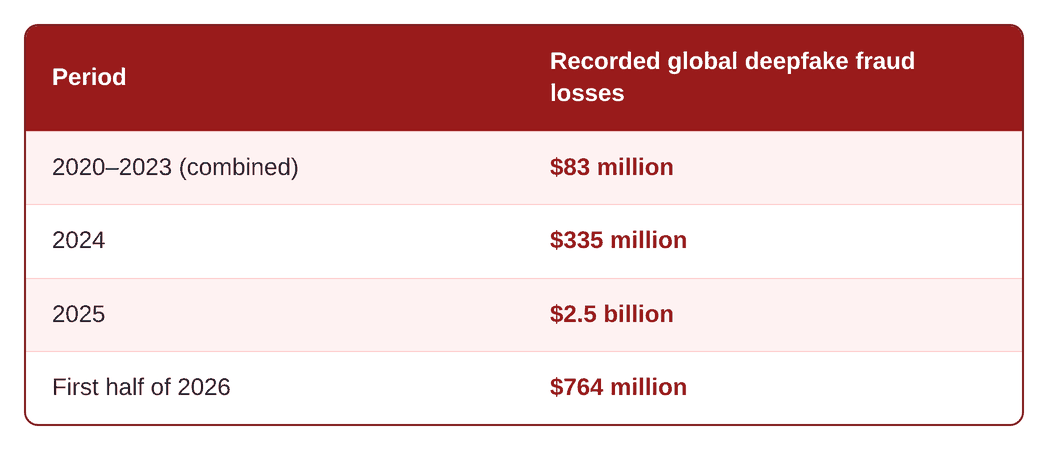
Roughly 47% of those losses ($1.73 billion) originated on social media, mostly fake investment schemes using synthetic videos of celebrities, business figures or officials. Another 25% came from impersonation and identity fraud.
For startups, this means scammers could misuse a founder’s face, a CEO’s voice or a company’s logo to deceive customers.
The trust data every founder should know
Here’s where things get difficult. Even when your company has done nothing wrong, customers may question whether the content they see online is genuine.
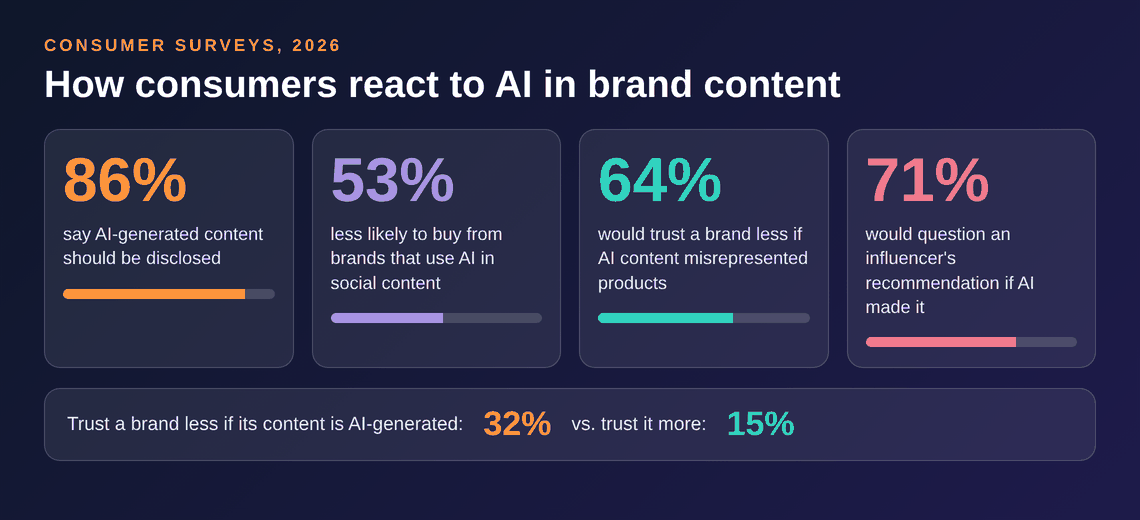
The Meltwater and YouGov report Trust in the Age of Generative AI (April 2026, nearly 10,000 consumers across seven markets) found that 86% of people say AI-generated content should be disclosed, and 32% brand trusts are less if its content were AI-generated, against 15% who would trust it more.
A Clutch survey of 601 consumers (August 2026) went further:
- 53% are less likely to buy from brands they know use AI in social content.
- 64% brand trusts or creator less if AI-generated content misrepresented their products.
- 71% would question a human influencer’s recommendation if AI created their content.
- Nearly 90% say brands and creators should disclose AI-generated social content.
The risk isn’t limited to fake content that uses your brand. Customers may also begin questioning whether your genuine communications, recommendations and product claims are authentic.
3 lessons the Pokimane story teaches startups
1. Speed and clarity beat perfection
Pokimane’s response was short, direct, and based on her values. It spread because it was clear about what she stood for. You don’t need a 2,000-word statement when a crisis hits. You need one honest paragraph, posted fast, from a human.
2. Your audience judges your values, not just your product
People didn’t pick sides based on features. They picked sides based on character. For a startup, that means your tone, your visuals and your public decisions all signal what you stand for. A consistent, cohesive brand makes those signals easy to read.
3. Old stories become new stories
Search engines and social feeds resurface history whenever a name trends. Remember that anything you’ve said or published could resurface at an inconvenient time. Build a brand that you’d be comfortable seeing quoted in three years.
The 6-step brand trust playbook for startups in the AI era
Here’s what I’d do if I were running a startup today.
Step 1: Lock down your visual identity
A strong, consistent identity is your first defense against impersonation. When your logo, colors, fonts, and writing style look the same across platforms, fake accounts and content become easier to spot.
Create a simple brand kit: logo files, color codes, fonts, social templates and usage rules. Share it with every team member and contractor.
Step 2: Verify your official channels
Create and verify your brand’s profiles on major platforms, even those you don’t actively use. Put your official links in one place (your website footer works) so customers can confirm what’s real.
Step 3: Set an AI disclosure policy
Since 86% of consumers want brands to disclose their use of AI, being silent about it can create doubt. Decide now where you’ll use AI (drafts, image ideation, support) and where you won’t (founder quotes, testimonials, customer stories). Then share a short explanation of your AI usage policy with your audience.
Step 4: Never fake faces or voices
No synthetic testimonials. No AI “customers”. No cloned founder videos. The short-term efficiency isn’t worth it when 64% of consumers say they’d trust you less if AI misrepresented your product.
Step 5: Add a verification habit for your team
Scams using copied voices and fake video calls are real (see our guide to protecting your visual identity from deepfakes). Set a rule: any request involving money, passwords or sensitive data gets confirmed through a second channel, no exceptions, even if the “CEO” is on screen.
Step 6: Write your crisis response before you need it
Draft a one-page plan now: who speaks, where you post, what you say first, and who approves it. If a crisis happens unexpectedly, you’ll be glad you already have a plan.
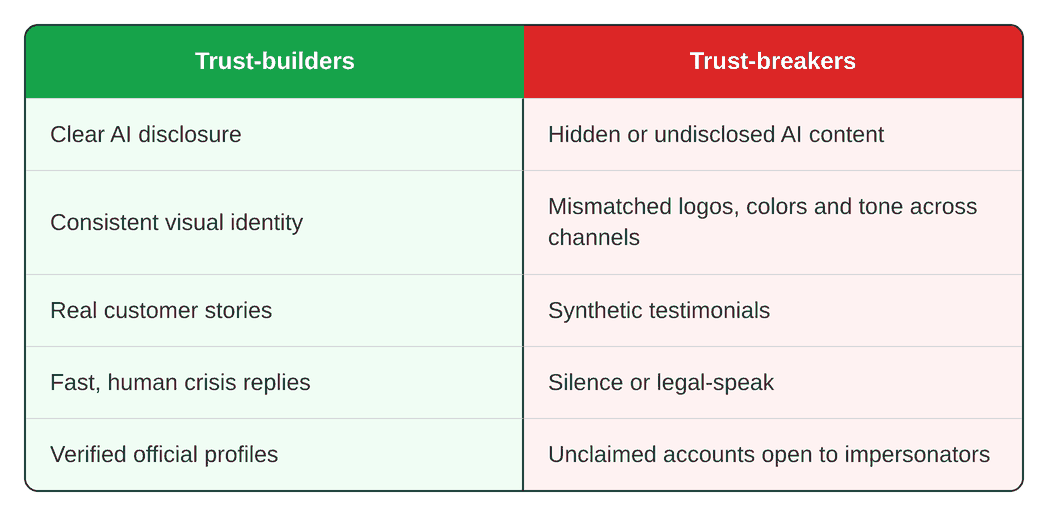
Quick reference: trust-builder vs. trust-breaker
The opportunity hiding in the risk
Here’s an opportunity: companies that take authenticity and transparency seriously can stand out from competitors that haven’t made these issues a priority.
When people find it difficult to trust brands, businesses that appear genuine, consistent, and reliable have an advantage. You can build that advantage with a clear brand identity and honest communication, even without a large budget.
According to Meltwater’s data, Creators were behind 92% of the most influential AI-related conversations on social media. Audiences listen to people. So put real people, real faces and real stories at the center of your brand.
Final thoughts
The Pokimane story isn’t really about one streamer. It offers a glimpse of the challenges every brand may face when AI-generated fake content spreads online.
Build the brand trust before you need it. Make your identity unmistakable. Be transparent about AI. And have a plan.
Need a brand identity that’s consistent, recognizable and hard to fake? At Draftss, our design subscription gives you unlimited design requests (logos, brand kits, social templates, landing pages and more) for a flat monthly fee. Start your Draftss subscription and build a brand your audience can trust.